![]() |
|
Genera available on this page |
|
|
|
NOTE: Pictured shells are representative examples from available stock. "One Only" shells pictured are the actual shells being offered |
||||
|
Click to enlarge |
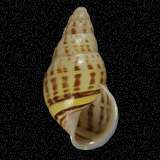
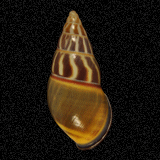
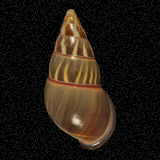
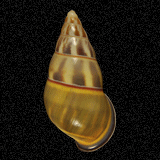
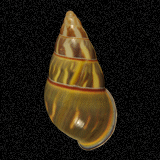
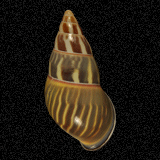
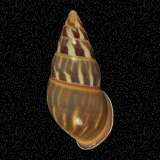
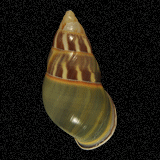
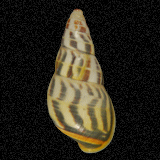
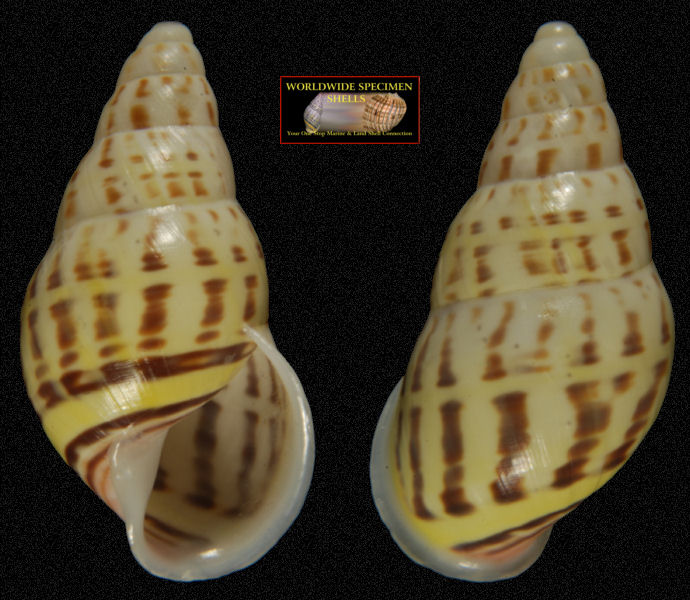
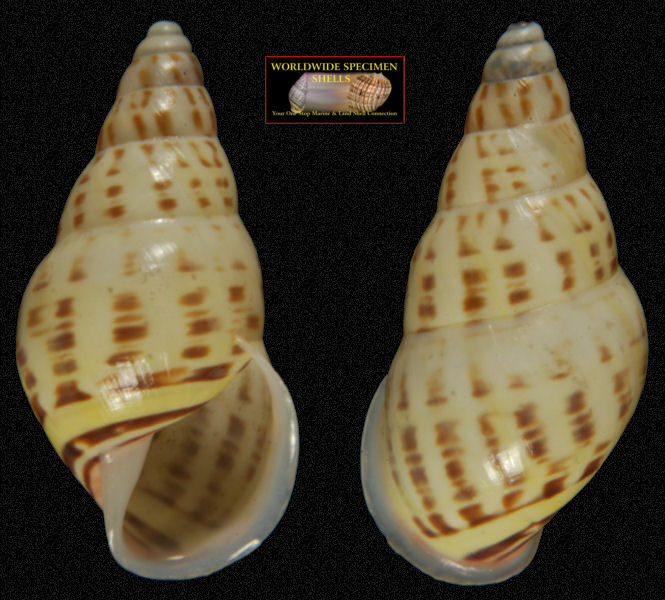
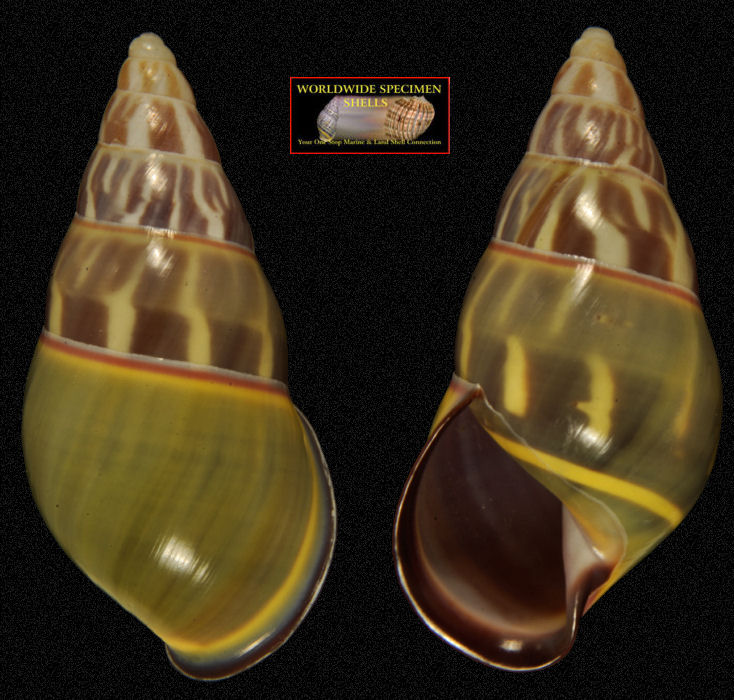
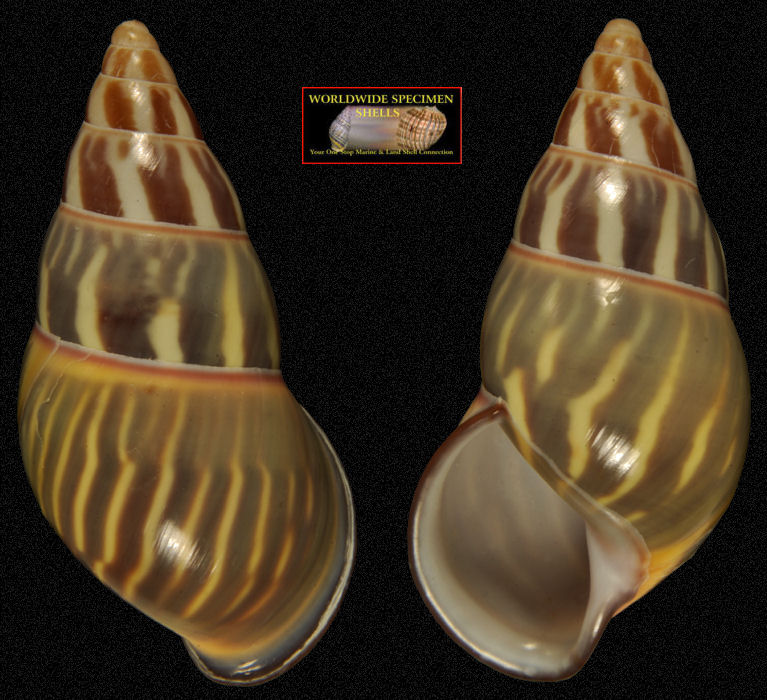
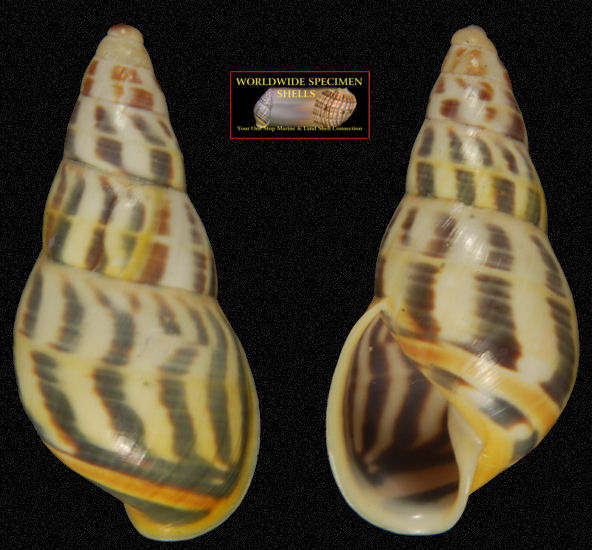
Amphidromus adamsii adamsii (Reeve, 1848)
Form: duplocinctus Fulton, 1896 The color form duplocinctus represents a two-toned shell, the colors divided at the center or periphery of the body whorl -- this form is white and yellow with green bands below the periphery. Pale lavender colored lip and pink tipped nuclear whorl.
|
|
Click to enlarge |
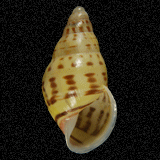
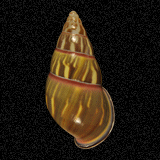
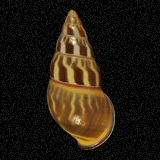
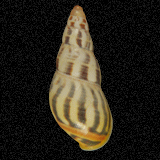
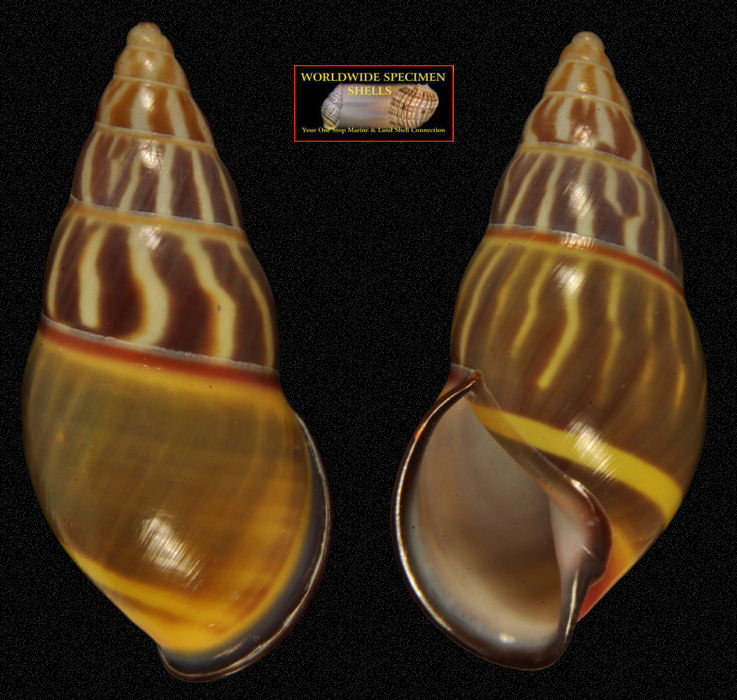
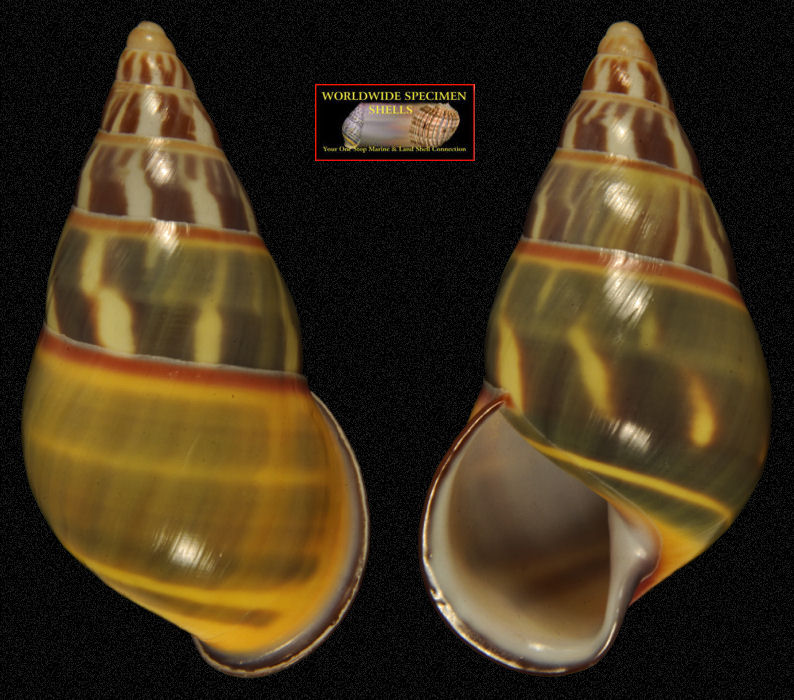
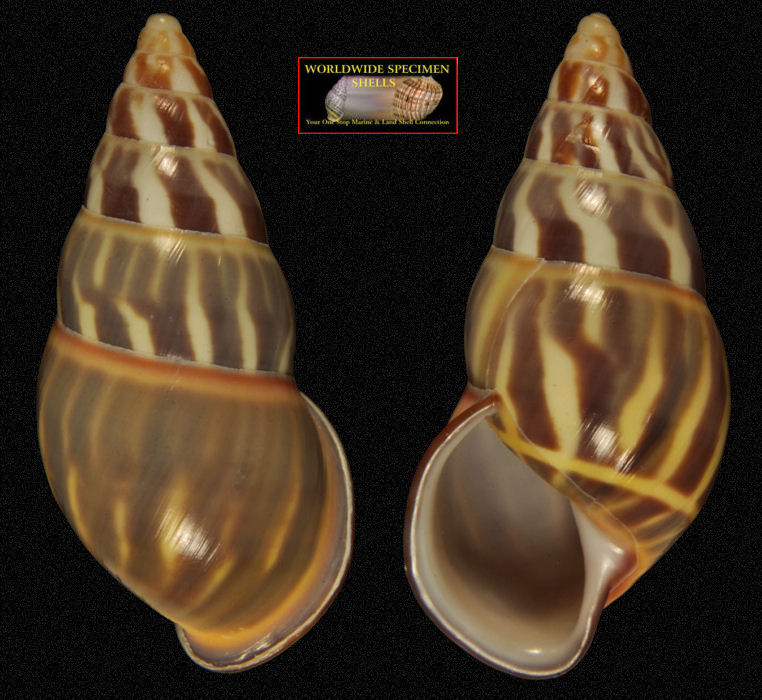
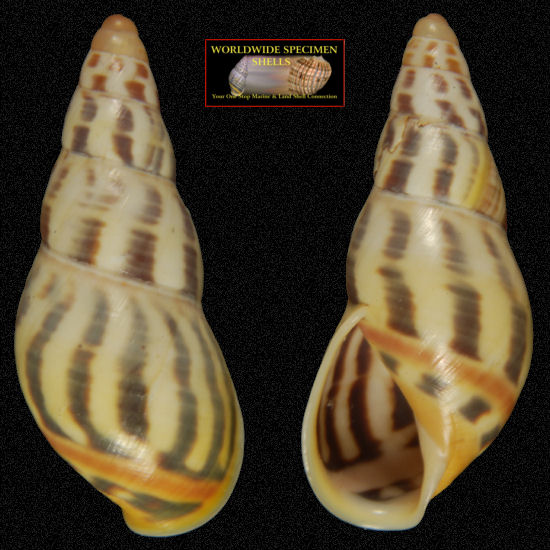
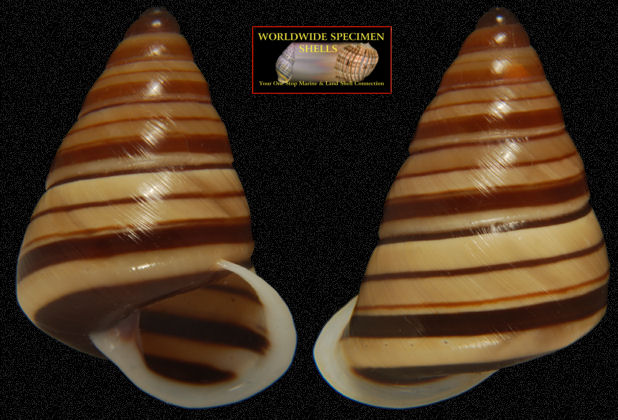
Amphidromus adamsii adamsii (Reeve, 1848)
Form: duplocinctus Fulton, 1896 A handsome brown form with red bands; very distinct from the yellow duplocinctus form.
|
|
Click to enlarge |
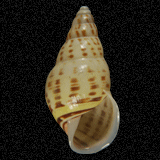
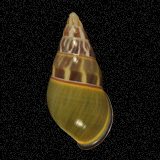
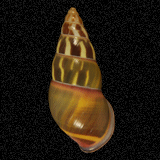
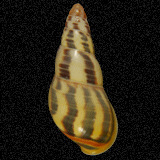
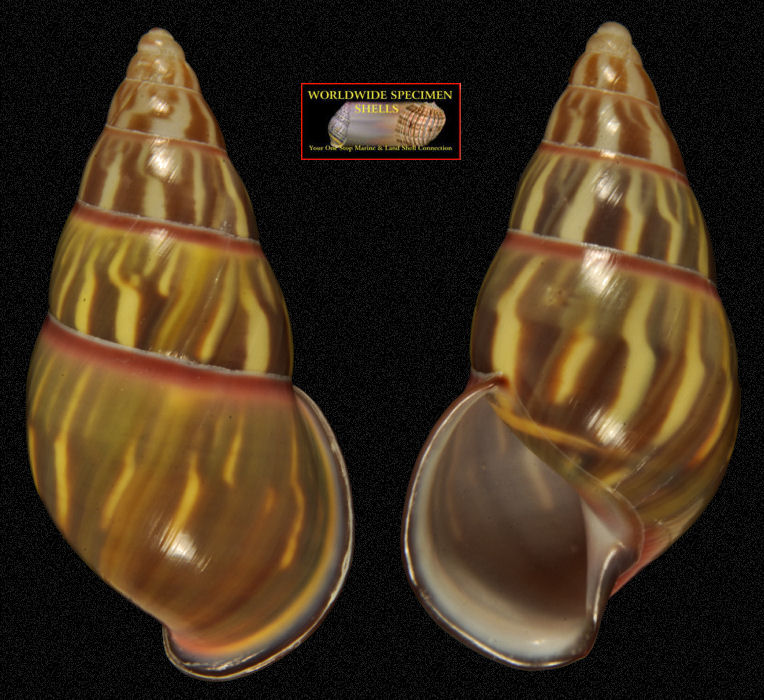
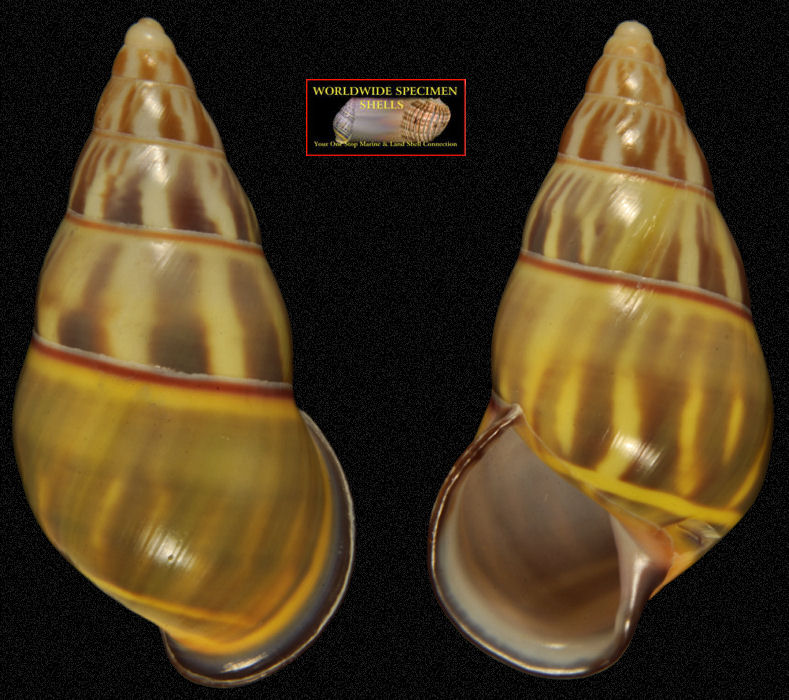
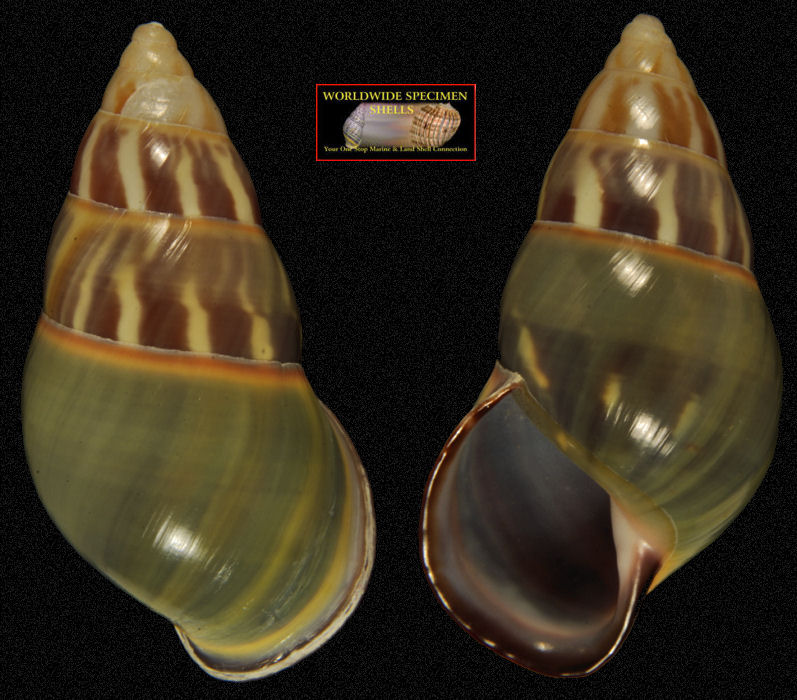
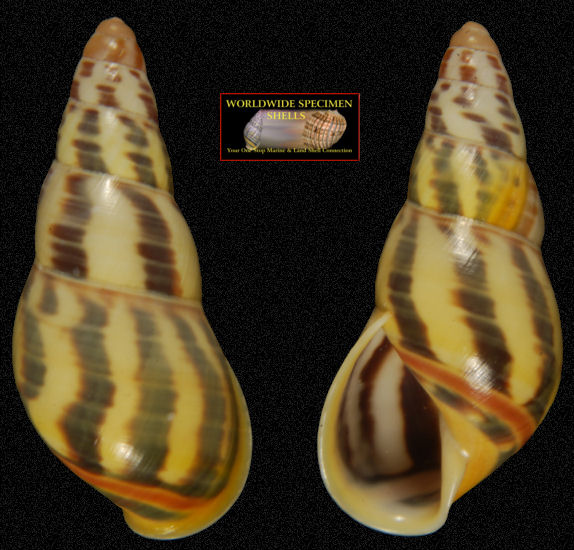
Amphidromus adamsii adamsii (Reeve, 1848)
Form: luteofasciatus Fulton, 1896 A mainland form, larger and more solid that the island-endemic forms. The combination of green color, yellow bands and lavender colored lip make this a truly magnificent shell.
|
|
Click to enlarge |
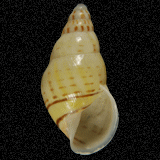
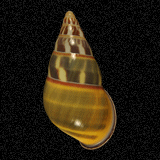
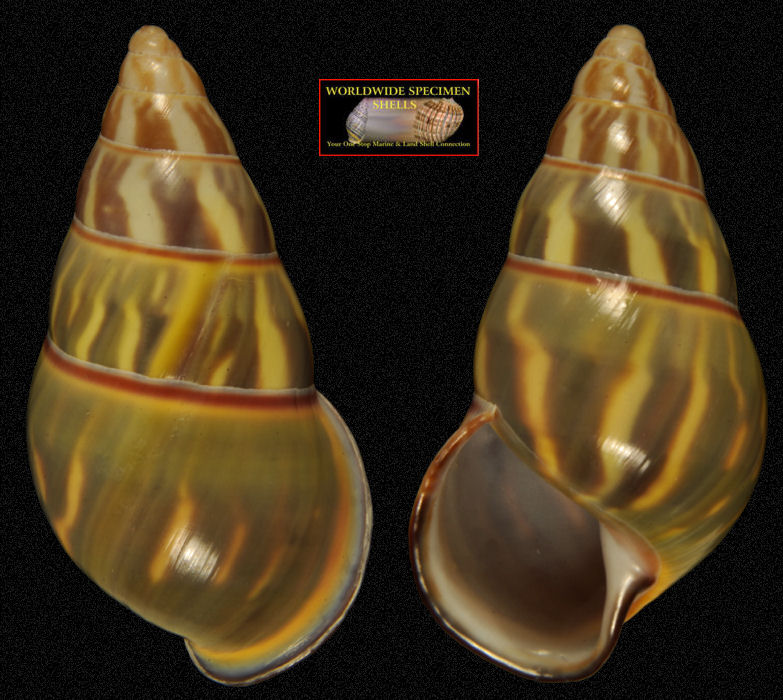
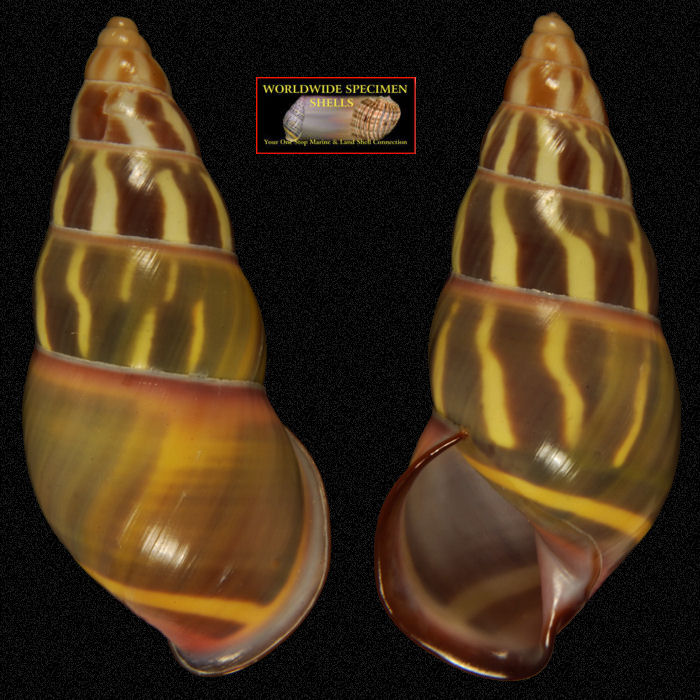
Amphidromus adamsii adamsii (Reeve, 1848)
Form: subunicolor Fulton, 1896 A form with brilliant yellow bands; one of the rarest of the adamsii color forms.
|
|
Click to enlarge |
Amphidromus adamsii adamsii (Reeve, 1848)
Form: superbus Fulton, 1896 By any accounts, one of the most beautiful land shells. It is difficult to describe, so check the pictures. No two are the same. The powder-blue color is quite unique for a molluscan shell. The combination of blue, green, red/orange yellow and white make this shell a standout in any collection. The color form is quite rare and endemic to one small island.
|
|
Click to enlarge |
Amphidromus beccarii Tapparone-Canefri, 1883
The species is in the A. sinistralis complex, but quite unique with bold glossy striations and a reflexed lip. A. beccarii has a very limited geographical distribution in southeastern Sulawesi Island.
|
|
Click to enlarge |
Amphidromus centrocelebensis Bollinger, 1918
The first live-taken shells I've ever had. This species has a very limited range in central Sulawesi Island. It is rare in collections due to the inaccessible habitat. This is one of only two species in the subgenus Syndromus that include dextral specimens. A limited number of sinistral (left-handed) and dextral (right-handed) specimens are available.
** Indicate a quantity of 2 if selecting a sinistral-dextral pair. ** Due to availability. (Due to availability) (Note any other preference details) |
|
Click to enlarge |
Amphidromus columellaris Moellendorff, 1892
The eastern-most species of the genus Amphidromus. Endemic to the Tanimbar Islands of Nusa Tenggara. It is difficult to describe the coloring of this beautiful species. Red bands highlight the green, yellow and black coloring. A truly magnificent member of the genus.
|
|
Click to enlarge |
Amphidromus enganoensis enganoensis Fulton, 1896
The nominate form of this species is limited to Engano Island. This lot of superb specimens represents one of the most highly diverse lots ever taken. There are no less than 5 general color forms with numerous intergrades, so essentially no two are the same. There are also sinistral and dextral (left and right-handed) specimens.
Color sets of 3 include a sinistral and dextral specimen. Color forms due to availability. (Due to availability) (Note any other preference details) |
|
Click to enlarge |
Amphidromus entobaptus coronensis Bartsch, 1917
A slender form endemic to Coron Island. The species and all its forms ranges throughout the Palawan Group of islands.
Color forms due to availability. |
|
Click to enlarge |
Amphidromus kruijti P. & F. Sarasin, 1899
A. kruijti is limited to northern Sulawesi Island, where each population varies in color. On the islands north of Sulawesi is a population that seems remarkably different from the mainland forms. This off-island lot may represent a new form, or possibly a new species.
|
|
Click to enlarge |
Amphidromus laevus (Müller, 1774)
A. laevus inhabits some of the more remote islands in eastern Nusa Tenggara, Indonesia. Each island which harbors the species have significantly different forms, illustrating how isolation and evolution have influenced the species. The Leti Islands off eastern Timor have very distinct populations. This lot represents those from Leti Island. The species is quite rare in collections and this form is even rarer.
** Indicate a quantity of 2 if selecting a pair with and without banding. ** Due to availability. |
|
Click to enlarge |
Amphidromus perversus niveus P. & F. Sarasin, 1899
Amphidromus perversus varies considerably from location to location. It has one of the widest geographical ranges off all species in the genus. The type species of A. perversus is a white shell, later described as form niveus, which this lot represents. This lot is from extreme southern Sulawesi Island and a small island form. These dextral (right-handed) shells are beautiful, outlined with black.
|
|
Click to enlarge |
Amphidromus perversus sultanus Lamarck, 1822
This lot includes a group of hand-selected shells with a broad range of colors and patterns -- yellow, white, purple-pink, flammulated, axially banded, etc. -- no two are alike. These distinct color forms are becoming increasingly difficult to find.
Due to availability. |
|
Click to enlarge |
Amphidromus quadrasi everetti Fulton, 1896
color form: palawanensis Bartsch, 1917 Amphidromus quadrasi populations from the island of Palawan are classified as subspecies everetti. There are a vast number of variations found throughout the island and on islands immediately north. This color form represents a population that was originally described by Bartsch as subspecies palawanensis. Now considered a color form, palawanensis is characterized by its larger size, solid shiny shell, grayish-greenish coloration, a red suture line, mostly with a black lip and no angulation to the last whorl. Variation within the lot include with or without a yellow band below the periphery of the body whorl and with or without yellow axial lines on the last whorl.
|
|
Click to enlarge |
Amphidromus sinistralis (Reeve, 1849)
A northerly population on the Minahasa Peninsula of Sulawesi, similar to A. sinistralis, color form lutea. These are an unusual and beautiful beige color. This population exhibits no pattern.
|
|
Click to enlarge |
Amphidromus sinistralis (Reeve, 1849)
color form: decolor Tapparone Canefri, 1884 Populations of this color form are found in the central part of the northern peninsula of Sulawesi. It is found in pure colonies and it also mixes with a beige-colored form. This form is also illustrated in Abbott's Compendium of Landshells.
|
|
Click to enlarge |
Amphidromus sinistralis (Reeve, 1849)
color form: lutea "Martens" Fulton, 1896 Populations of A. sinistralis throughout its known distribution in northern Sulawesi exhibit very different and distinct shape and/or color variations. This localized population was appropriately described at "lutea" for its consistent yellow color, which is, in fact, a yellow periostracum.
|
|
Click to enlarge |
Camaena mamilla (Férussac, 1821)
Limited range in northern Sulawesi Island.
|
|
Click to enlarge |
Crystallopsis leucophthalma (Pfeiffer, 1870)
Among the great rarities of Southeast Asian land shells are those from remote islands. Crystallopsis leucophthalma is one that has been unknown in collections for many decades. It is endemic to only one small group of islands north of Sulawesi Island, Indonesia. The thin inflated shell is quite attractive, and one of the largest species of the genus.
|
|
Click to enlarge |
Labyrinthus lepieurii (Petit, 1840)
Intricate tooth structure barricading the aperture opening. Quite interesting and uncommon.
|
|
Click to enlarge |
Megalacron lambei mahurensis Fulton, 1916
Color form endemic to Mahur Island.
|
|
Click to enlarge |
Megalacron lufensis (Thiele, 1928)
Endemic to the Ninigo Island Group off northern Papua New Guinea.
|
|
Click to enlarge |
Megalacron spadicea dunckeri (Leschke, 1912)
A color form endemic to only a few small islands of the northern Bismarck Archipelago.
|
|
Click to enlarge |
Obba papilla konawensis Bollinger, 1918
The largest of a handful of O. papilla forms endemic to northern Sulawesi.
|
|
Click to enlarge |
Obba papilla pygmaea P.& F. Sarasin, 1899
The smallest of a handful of O. papilla forms endemic to northern Sulawesi.
|
|
Click to enlarge |
Papuina blainvillei (Guillou, 1842)
Endemic to the remote Aru Islands of Indonesia. One of the few Papuina sculptured with ribs. It is rare and almost unknown in collections for the past century.
|
|
Click to enlarge |
Papuina labium (Férussac, 1821)
Many forms of this species found on surrounding islands off northwest Irian Jaya, which have spawned many synonymous names. This form is from Salawati Island.
|
|
Click to enlarge |
Papuina lepida Fulton, 1916
Endemic to one island off northern Irian Jaya.
|
|
Click to enlarge |
Papuina pileus (Müller, 1774)
Endemic to the remote Aru Islands of Indonesia. An amazing variety of patterns are exhibited; solid, banded, and everything inbetween. Getting to the Aru Islands is an adventure in itself. One of the first Papuina ever to be illustrated back in the 1700's.
|
|
Click to enlarge |
Papuina steursiana ("Shuttleworth" Pfeiffer, 1853)
One of the large, varied and spectacular Papuina from Irian Jaya with many synonyms.
|
|
Click to enlarge |
Papuina subcostata Fulton, 1916
Endemic to one island off northern Irian Jaya.
|
|
Click to enlarge |
Planispira atacta (Pfeiffer, 1861)
Attractive member of the genus. Endemic to Halmahera Island in the Moluccas and the surrounding islands off the southern end of Halmahera.
|
|
Click to enlarge |
Planispira deaniana (Ford, 1890)
Found in an array of color forms. A widely ranging species in the Moluccas of Indonesia. The delicate pink coloration is rather attractive.
|
|
Click to enlarge |
Planispira moluccensis (Pfeiffer, 1851)
Limited to the the southern Maluku Islands.
|
|
Click to enlarge |
Planispira torticollis (Guillou, 1842)
Endemic to the Aru Islands and other small islands of the Moluccas of Indonesia. the colors vary considerably.
|
|
Click to enlarge |
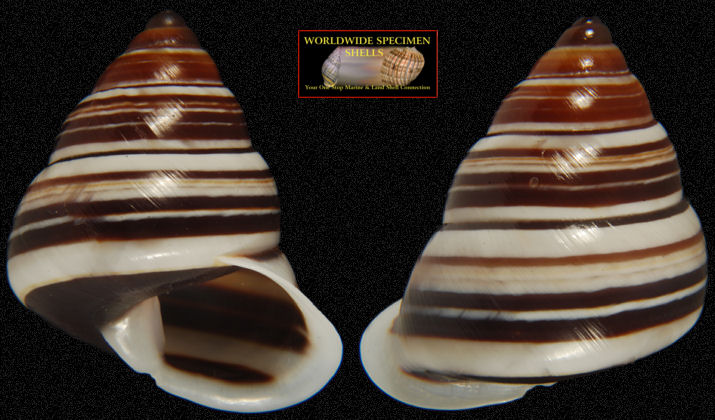
Planispira zonaria (Linné, 1767)
Planispira is a Southeast Asian genus, that are low, flat, helical shells, many with beautiful patterns and rich colors. Planispira zonaria is the type species of the genus and is quite variable throughout its range. These shells represent for form coluber.
|
|
Click to enlarge |
Polydontes undulata (Férussac, 1821)
Type species of the subgenus Hispaniola. Endemic to Haiti.
|
|
Click to enlarge |
Rhynchotrochus wiegmanni (Martens, 1894)
Color form endemic to southern end of New Britain.
|
All content on this Web site are © 2008, Worldwide Specimen Shells.
All rights reserved. No content may be reproduced, or retransmitted without prior written approval from the copyright holder. |